
William Bradshaw
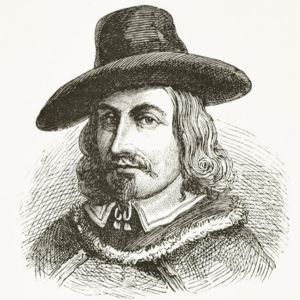
William Bradshaw
The quiet architect of English Nonconformity
Born around 1570 in Staffordshire and educated at Emmanuel College, Cambridge, Bradshaw came under the influence of Thomas Cartwright, the era’s foremost Presbyterian voice. He served as a minister and chaplain but repeatedly refused to conform to vestments and episcopal ceremonies he judged unscriptural, suffering suspension and an itinerant ministry lived largely under official suspicion. He published most works anonymously out of necessity.
Why He Matters
Bradshaw made three lasting contributions to Puritan history. First, he argued with unusual precision that Scripture alone — not royal prerogative or episcopal tradition — is the church’s only constitution. Second, he pushed toward congregationalism, granting individual gathered churches a spiritual independence that anticipated the movement’s separating wing. Third, his 1605 tract English Puritanism was among the first texts to take the label “Puritan” and define it systematically — turning a term of mockery into a theological programme. Working closely with William Ames, who translated his ideas into Latin and carried them further, Bradshaw’s ecclesiology flowed directly into the covenantal logic of early New England.
Legacy
Bradshaw died in 1618 — before the Puritan exodus, before the Civil Wars, before the execution of a king. He did not live to see the world his ideas helped to make. Less celebrated than Perkins or Sibbes, he nonetheless stands at a crucial junction: the moment Puritanism moved from a mood of grievance to a coherent programme, and found the words to say so plainly. That lineage runs from Bradshaw and Ames to the covenants of Plymouth and Massachusetts Bay, and from there to the broader principle that state authority over conscience has limits.
Quotes
“The word of God contained in the writings of the Prophets and Apostles is of absolute perfection, given by Christ the Head of the Church to be unto her the sole canon and rule of all matters of Religion.” – English Puritanism
“Christ alone is king and lawgiver in his Church, and it is not in the power of any man or any assembly of men to impose upon the consciences of others any ceremonies not instituted by Christ himself.” – Several Treatises of Worship and Ceremonies
“Every particular congregation of Christians ought to have entire power and jurisdiction ecclesiastical within itself, and over its own members, and none else.” – A Treatise of the Nature and Use of Things Indifferent
Writings
English Puritanism – The movement’s first major manifesto — a concise definition of Puritan doctrine on church governance and Scripture’s sole authority.
A Treatise of the Nature and Use of Things Indifferent – Argued that the Church of England had no authority to impose ceremonies or vestments lacking direct Scriptural sanction
Several Treatises of Worship and Ceremonies – Published after his death, this collection appeared just as the Restoration crisis made his arguments urgently relevant again.
More Puritan Summaries