
Robert Bolton
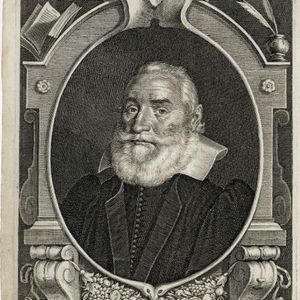
Robert Bolton: The Thundering Conscience of English Puritanism
A faithful minister whose pen and pulpit shook the comfortable and comforted the broken
Few names in the long gallery of English Puritanism carry the combined weight of intellectual brilliance, dramatic personal conversion, and uncompromising pastoral courage quite like that of Robert Bolton. Born in 1572 in Blackley, Lancashire, Bolton rose from humble origins to become one of the most formidable preachers and spiritual directors of his age — a man whose writings on the conscience, affliction, and assurance still repay careful reading four centuries after his death.
From Brilliant Sinner to Converted Preacher
At Oxford’s Brasenose College, Bolton was acknowledged as one of the most gifted scholars of his generation — lauded for his command of philosophy, Greek, and Latin — yet by all accounts he was proud, quarrelsome, and entirely given over to worldly pleasures. His friendship with the Puritan Richard Greenham and his encounter with the preaching of Arthur Hildersham and others proved the turning point. The conversion that followed was neither gradual nor comfortable: Bolton described it as an agonizing reckoning with sin, a season of spiritual terror, and an eventual discovery of grace that would shape every line he ever wrote.
Ordained in 1609 and installed as rector of Broughton in Northamptonshire — a living he would hold until his death — Bolton spent over two decades building one of the most celebrated pulpit ministries in England. Northamptonshire itself was a heartland of Puritan zeal, home to figures such as John Dod and William Perkins’s legacy, and Bolton found both a congenial brotherhood of ministers and a congregation hungry for the kind of searching, experimental preaching he delivered.
Why Bolton Matters In Puritan History
Bolton occupies a vital position in the history of Puritanism for several reasons. First, he stands as a pre-eminent expositor of practical divinity — that distinctly Puritan tradition of applying Reformed theology directly to the interior life of the believer. Where some contemporaries leaned heavily on the doctrinal or polemical, Bolton excelled at the pastoral: diagnosing afflicted consciences, prescribing remedies drawn from Scripture, and walking readers through the valley of spiritual despair toward assured faith.
Second, Bolton was a courageous social prophet. His treatise on the duties of the wealthy and his unflinching condemnation of the sins of the gentry — gaming, swearing, Sabbath-breaking, extortion — made him deeply unpopular in certain powerful quarters. He famously rebuked Sir Augustine Nichols, a local justice, for his irreligion, and was reported to have reduced hardened sinners to tears through the sheer weight of his preaching. He did not merely comfort; he also confronted.
Third, Bolton contributed meaningfully to the broader Puritan project of equipping the laity. His works were written accessibly, addressed to ordinary believers navigating real spiritual crises, and were reprinted widely throughout the seventeenth century. The Westminster Assembly divine Richard Sibbes praised his writings, and later figures such as Richard Baxter drew on the tradition Bolton helped establish.
The Preacher’s Death and Legacy
Bolton died in 1631 at Broughton, reportedly with great composure and assurance of faith — a death that his admirers saw as the fitting seal upon a life of consistent godliness. His son Samuel gathered and published several of his manuscripts posthumously, ensuring his voice continued to shape the piety of the next generation. Edmund Calamy, the great chronicler of Puritan nonconformity, counted Bolton among the most excellent ministers of his time.
His legacy is that of a man who understood, from the inside, what it meant to be broken and then mended by grace. That experiential authority gave his writings a gravity and warmth that purely academic theology could never supply. For students of the Puritan movement, Bolton remains essential reading — not merely as a historical figure, but as a physician of souls whose diagnoses remain painfully accurate and whose remedies remain gloriously sufficient.
Quotes
“A true Christian is one who, feeling the weight of sin and the wrath of God, hath fled by faith to Jesus Christ for pardon and peace, and doth daily mortify his corruptions and press forward in all holy obedience.”
“Hell is truth seen too late. Heaven is truth embraced in time. Make no peace with your sins; they are making none with you.”
Writings
Instructions for a Right Comforting of Afflicted Consciences – Bolton’s masterwork on pastoral care — a thorough guide to diagnosing and treating spiritual despair.
A Discourse about the State of True Happiness – An early and widely-read work setting out the nature of genuine Christian joy and blessedness — contrasting the false happiness of worldly men with the durable peace found only in God.
Some General Directions for a Comfortable Walking with God – A practical manual for the Christian life, covering prayer, meditation, holy conversation, and the keeping of the Sabbath.
More Puritan Summaries